



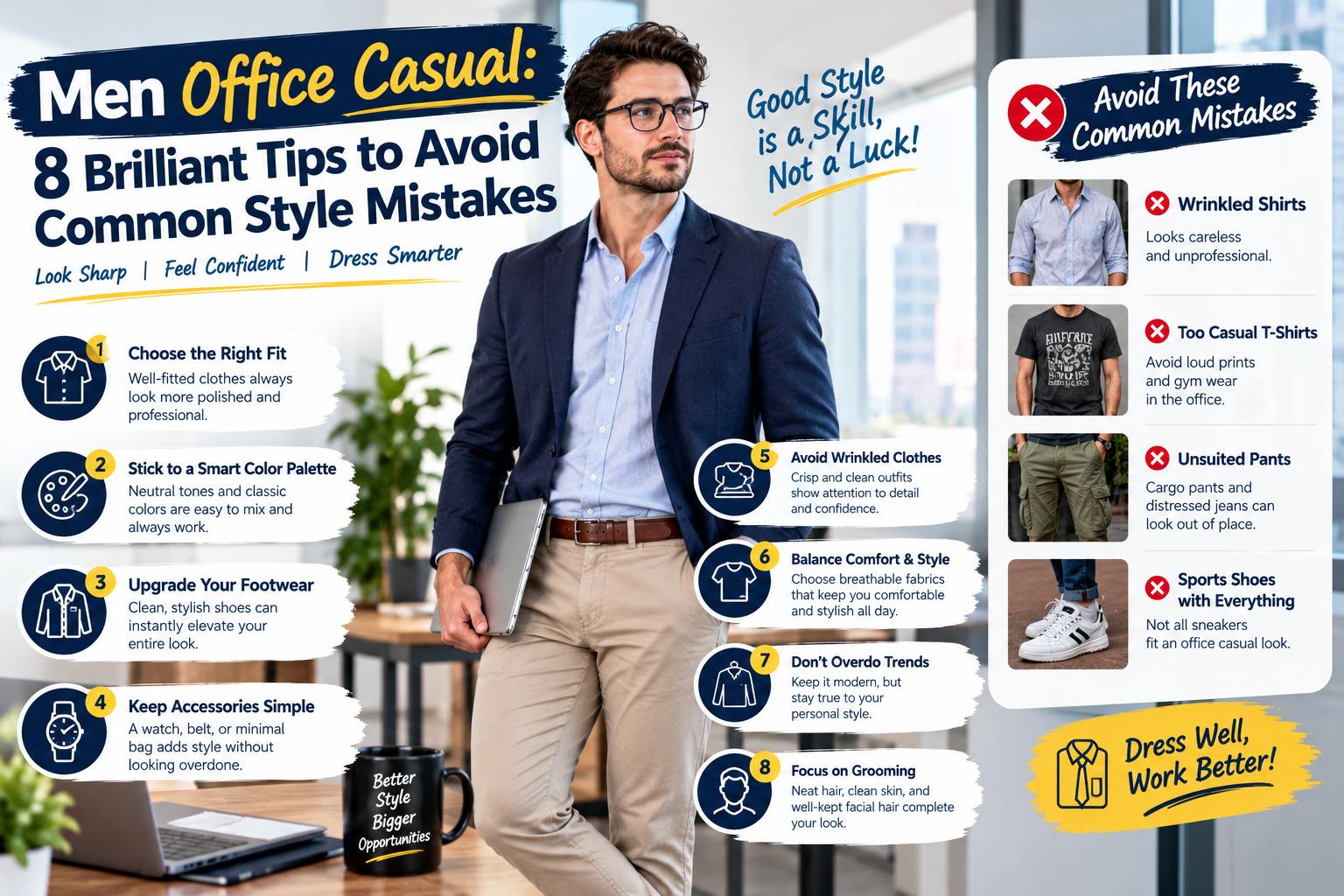
Men office casual style is all about looking professional without feeling uncomfortable or overdressed. The right combination of shirts, trousers, shoes, and accessories can help you create a polished appearance for everyday office work, meetings, and business events. You do not need an expensive wardrobe to look smart. You simply need versatile clothing that fits well and suits your workplace.
Whether you work in a corporate office, a creative environment, or a business with a relaxed dress code, understanding men office casual fashion can make getting dressed easier. The goal is to balance comfort, confidence, and professionalism while avoiding common style mistakes that can make an outfit look untidy.
Business casual rules vary between workplaces, so it is helpful to understand your company’s expectations. The Emily Post Institute’s business casual attire guide explains how clothing choices can change depending on the setting and level of formality.
In this guide, you will discover eight practical tips for building stylish office outfits, choosing suitable colours, and making better use of the clothes you already own.
What Does Men Office Casual Mean?
Men office casual refers to clothing that looks neat and professional while offering more flexibility than traditional business attire. Instead of wearing a full suit and tie every day, you can combine smart shirts, chinos, tailored trousers, knitwear, loafers, and suitable casual shoes.
For example, a light-blue button-down shirt paired with navy chinos and brown loafers can create a simple office-ready outfit. On cooler days, adding a blazer or a fine-knit sweater can make the look more refined.
However, office casual does not mean wearing anything comfortable. Ripped jeans, stained shirts, gym shorts, flip-flops, and overly casual graphic T-shirts may not suit many professional workplaces. Always consider your company’s dress code before choosing an outfit.
The best approach is to build a wardrobe around versatile basics that can be combined in different ways. This saves time, reduces unnecessary spending, and helps you maintain a consistent professional appearance.
8 Brilliant Men Office Casual Tips to Avoid Common Style Mistakes
1. Choose Well-Fitted Shirts
A well-fitted shirt is one of the most useful pieces in a men’s office casual wardrobe. It creates a clean silhouette and makes even a simple outfit look more polished.
Start with classic colours such as white, light blue, pale grey, and subtle stripes. These shades work well with different trousers and jackets, allowing you to create several outfits from a small collection of clothes.
Pay attention to the shoulders, sleeves, collar, and overall length. Your shirt should allow you to move comfortably without pulling tightly across the chest or hanging excessively around the waist. If you prefer a relaxed appearance, choose a casual button-down shirt or a quality polo, provided it meets your workplace’s dress code.
Style mistake to avoid: Wearing a shirt that is too tight, too loose, or visibly wrinkled. Even an expensive shirt can look untidy when the fit is wrong.
2. Build Your Wardrobe Around Neutral Colours
Neutral colours make office styling easier because they coordinate with one another. Navy, black, grey, white, beige, and olive are useful choices for creating outfits that look balanced rather than overly complicated.
For example, navy chinos can work with a white shirt, a grey sweater, or a pale-blue button-down. Beige trousers can pair nicely with a navy polo or a white Oxford shirt. These combinations give you flexibility without requiring a large wardrobe.
You can also introduce colour through accessories, shirts, or knitwear. Burgundy, forest green, and muted blue can add personality while keeping your appearance professional.
If you enjoy exploring new clothing combinations, read this related guide on fashion trends of the future. Use trend ideas selectively and adapt them to your office environment rather than following every new look.
Style mistake to avoid: Combining too many bold colours or competing patterns in one outfit. Start with two or three complementary colours and add more only when they work together.
3. Invest in Chinos and Tailored Trousers
The right trousers can transform your office outfit. Chinos offer a relaxed but polished appearance, while tailored trousers provide a more formal option for meetings, presentations, and traditional workplaces.
Consider owning a few dependable pairs in navy, charcoal, beige, or black. These colours work with most office shirts and shoes. Choose a fit that allows comfortable movement and sits neatly at the waist.
The length also matters. Trousers should not bunch excessively around your ankles or drag along the floor. A clean, appropriate hem helps the whole outfit appear more intentional.
Dark, well-maintained jeans may be acceptable in some modern or creative offices, but they are not universally considered business casual. Check your company’s policy before wearing denim, especially for client meetings.
Style mistake to avoid: Wearing faded, ripped, excessively baggy, or overly tight trousers in a workplace that expects a polished appearance.
4. Select Shoes That Match the Workplace
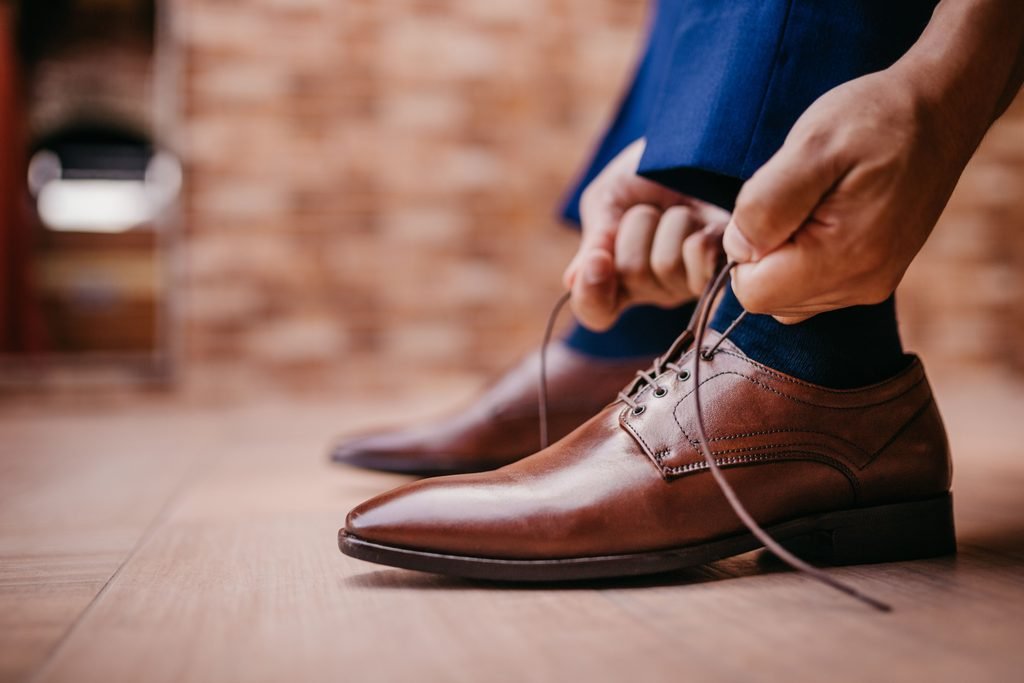
Shoes can make a major difference to your overall appearance. Even when your clothing is simple, clean and suitable footwear can make the outfit look complete.
For a traditional business casual setting, consider leather loafers, derby shoes, or other understated dress shoes. Suede loafers or minimalist sneakers may work in more relaxed workplaces, depending on company expectations.
Choose versatile colours such as black, dark brown, or tan. Match the formality of your footwear to the rest of your outfit. For instance, tailored trousers and a button-down shirt usually pair better with loafers or dress shoes than with bulky athletic trainers.
Keep your footwear clean and in good condition. Wipe away dust, check the soles, and maintain leather or suede according to the material’s care instructions.
Style mistake to avoid: Wearing dirty sneakers, worn-out shoes, or casual sandals when your office expects professional footwear.
5. Use Blazers and Layers for a Smarter Look
A blazer is a practical addition to a men’s office casual wardrobe because it can make a basic outfit look more refined. You can wear one over a button-down shirt with chinos for a meeting or combine it with tailored trousers for a more formal day.
You do not always need a structured suit jacket. An unstructured blazer, fine-knit cardigan, or lightweight sweater can provide a comfortable alternative. These layers are particularly useful when office temperatures change throughout the day.
Choose colours that complement your existing wardrobe. A navy blazer, for example, works with grey trousers, beige chinos, and several shirt colours. A charcoal or neutral sweater can also be layered over a collared shirt for a neat, understated appearance.
Keep the proportions balanced. If your trousers are slim and tailored, a jacket that fits your shoulders and body properly will help the outfit look cohesive.
Style mistake to avoid: Wearing a jacket that pulls across the shoulders, has excessively long sleeves, or clashes with the formality of your trousers.
6. Keep Accessories Simple and Practical
Accessories should support your outfit rather than distract from it. A simple leather belt, a classic watch, and a professional work bag can add useful finishing touches without making your appearance feel crowded.
Your belt should generally coordinate with your shoes when wearing traditional leather footwear. You can also choose a subtle watch with a clean design that suits your personal style and workplace.
If you wear glasses, select a frame that feels comfortable and complements your face. For bags, structured backpacks, briefcases, or simple messenger bags may work, depending on your office culture.
The key is to choose accessories that serve a purpose and fit the overall style of your clothes. You do not need expensive designer items to look professional.
Style mistake to avoid: Wearing too many large accessories, oversized logos, or distracting pieces that compete with your clothing.
7. Pay Attention to Grooming and Clothing Care
Good grooming is an essential part of men office casual style. Clothes may fit perfectly, but an unkempt appearance can still make an outfit feel unfinished.
Keep shirts clean, trousers properly pressed when needed, and shoes in good condition. Check your clothes for loose buttons, small stains, missing threads, and damaged hems before leaving home.
Personal grooming should also suit your preferences and workplace. Clean hair, tidy facial hair if you have it, and basic personal hygiene help create a neat overall impression.
You can make clothing care easier by hanging shirts after washing, following garment care labels, and keeping frequently worn items ready for the week. Preparing outfits in advance can also reduce morning stress.
Style mistake to avoid: Assuming that fashionable clothing can compensate for stains, wrinkles, damaged fabric, or neglected personal care.
8. Dress According to Your Office Culture

The most stylish outfit is not necessarily the best choice for every workplace. A technology company may allow clean sneakers and dark jeans, while a law firm or financial office may expect tailored trousers and leather shoes.
Observe what colleagues wear and review any written dress code. Consider the occasion as well: an ordinary office day may allow a polo shirt and chinos, whereas a client presentation might call for a button-down shirt and blazer.
You can also adjust your outfit to the season. Lightweight cotton shirts and breathable trousers can be comfortable in warm weather. During cooler months, fine-knit sweaters, structured jackets, and suitable layering pieces can provide warmth without looking bulky.
If you are uncertain, choose a slightly more polished outfit until you understand the workplace’s expectations. You can then introduce more relaxed pieces where appropriate.
Style mistake to avoid: Assuming that every office follows the same dress code or copying a casual outfit without considering the occasion.
Easy Men Office Casual Outfit Combinations
You do not need to plan a completely new look every morning. These simple combinations can help you create a dependable rotation for work.
| Occasion | Outfit combination |
| Everyday office | Light-blue shirt, navy chinos, brown loafers |
| Important meeting | White shirt, charcoal trousers, navy blazer, dress shoes |
| Relaxed workplace | Quality polo, tailored chinos, clean minimalist sneakers if permitted |
| Cooler weather | Button-down shirt, fine-knit sweater, dark trousers, leather shoes |
| Casual Friday | Dark, clean jeans if permitted, Oxford shirt, loafers or approved sneakers |
Use these combinations as starting points rather than strict rules. Adjust the colours, layers, and footwear to your personal style, comfort, climate, and workplace requirements.
Common Men Office Casual Mistakes to Avoid
Even a simple outfit can look less professional when small details are overlooked. These are some of the most common problems to watch for:
- Ignoring fit: Clothes that are too tight or too loose can affect both comfort and appearance.
- Wearing unsuitable footwear: Athletic shoes, flip-flops, or damaged footwear may not suit your office.
- Overusing trends: Not every fashion trend belongs in a professional environment.
- Forgetting clothing care: Wrinkles, stains, and worn-out fabric can undermine an otherwise good outfit.
- Misunderstanding the dress code: Jeans and sneakers are acceptable in some workplaces but inappropriate in others.
- Buying too many statement pieces: Versatile basics usually provide more outfit combinations and better long-term value.
Avoiding these mistakes can help you look polished without making your routine complicated or expensive.
Benefits and Challenges of Men Office Casual Style
Men office casual clothing offers several advantages. It can be more comfortable than traditional formal wear, gives you room to express your personal style, and allows you to create multiple combinations from a relatively small wardrobe. Versatile pieces can also help reduce unnecessary clothing purchases.
However, this style has a few challenges. Dress codes can be unclear, and an outfit that looks appropriate in one company may be too casual in another. Building a wardrobe with the right balance of comfort, quality, and professionalism can also require some planning.
The solution is to understand your workplace, invest in versatile essentials, and check the fit and condition of your clothes. With a little preparation, office dressing becomes easier and more consistent.
Frequently Asked Questions
1. What should men wear for office casual?
A button-down shirt or quality polo, chinos or tailored trousers, and suitable shoes are dependable options. Add a blazer or sweater when needed, and always follow your workplace’s dress code.
2. Are jeans acceptable for men office casual outfits?
It depends on the company. Some relaxed workplaces allow dark, clean jeans without rips, while more traditional offices expect chinos or dress trousers. Check the policy before choosing denim.
3. Which colours work best for office casual clothing?
Navy, white, grey, black, beige, and light blue are versatile choices. They are easy to combine and can create a professional appearance without requiring many clothes.
4. Can men wear sneakers to the office?
Clean, understated sneakers may be acceptable in casual or creative workplaces. Leather loafers and dress shoes are generally safer choices for more formal business casual environments.
5. How can men look stylish at work on a budget?
Start with versatile essentials, choose neutral colours, prioritise fit, and take care of your clothes. You can create several outfits by combining a few quality shirts, trousers, shoes, and layers.
Conclusion
Men office casual style does not have to be complicated. With well-fitted shirts, versatile trousers, suitable shoes, simple accessories, and good grooming, you can create outfits that feel comfortable and look professional.
The eight tips in this guide provide a practical starting point, but your office culture should always influence your choices. Avoid common style mistakes, invest in clothing you can combine in different ways, and choose pieces that suit your everyday responsibilities.
A polished appearance is not about wearing the most expensive brands. It is about making thoughtful choices, keeping your clothes in good condition, and feeling confident in what you wear.