



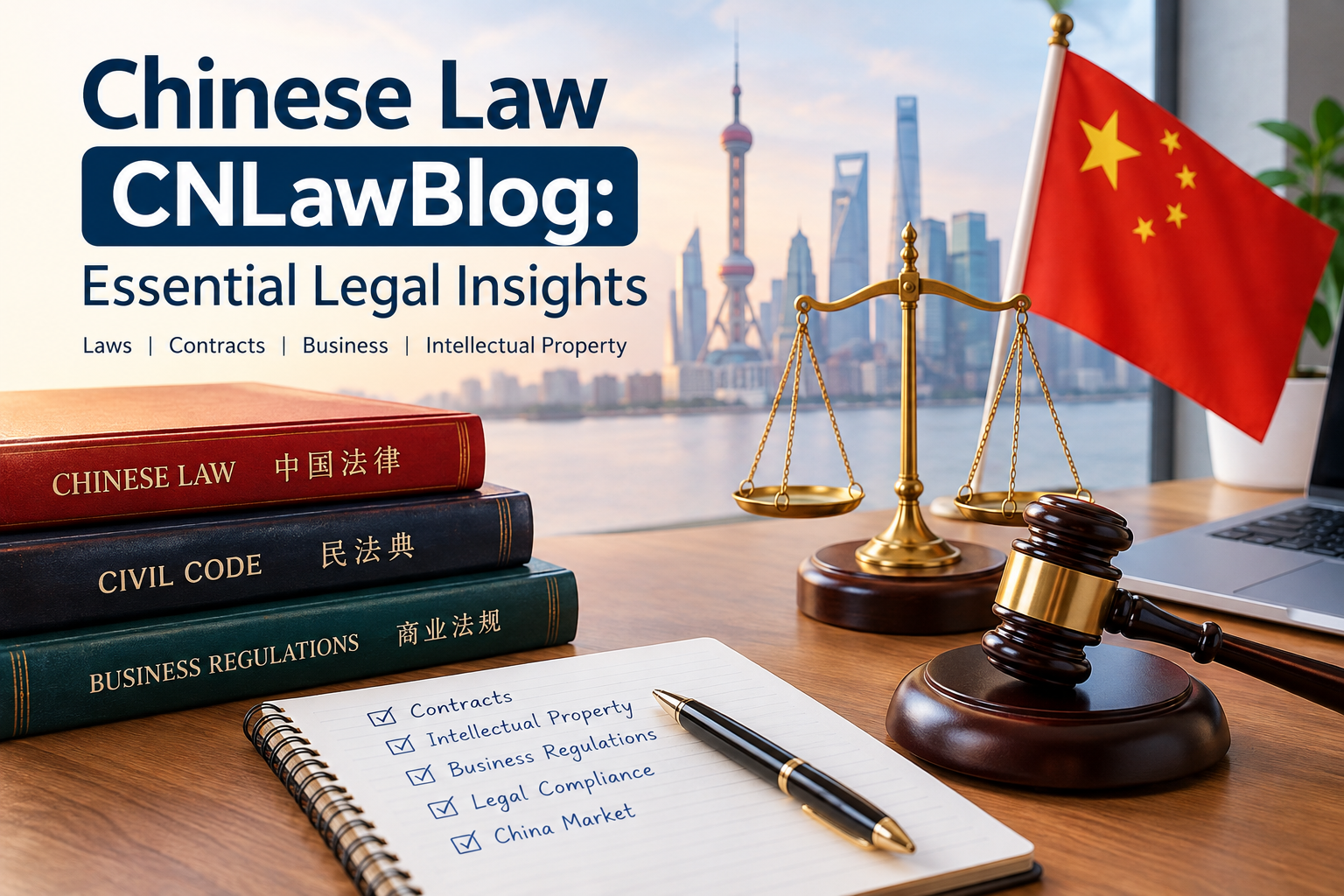
Chinese Law CNLawBlog: Essential Legal Insights is a useful topic for anyone seeking to understand China’s legal system, business regulations, contracts, and intellectual property rules. Whether you are an entrepreneur, an international investor, a student, or simply interested in Chinese law, learning the basics can help you make more informed decisions.
China has a broad legal framework covering civil relationships, commercial activities, employment, property, foreign investment, and dispute resolution. These rules can affect both local businesses and international companies working with Chinese partners.
Online legal resources can make complex subjects easier to understand. However, readers should distinguish between general educational information and professional legal advice. Laws may change, and their application depends on the facts of each situation.
This article explores ten essential legal insights, explains common challenges, and offers practical ways to research Chinese law using reliable sources.
1. Understanding the Chinese Legal System
China’s legal system includes national laws, administrative regulations, local regulations, and judicial interpretations. Each serves a particular purpose, and understanding how these sources relate to one another is important when researching a legal issue.
National laws establish many of the main rules governing civil rights, commercial relationships, criminal matters, and other legal areas. Administrative regulations and local rules may provide additional requirements within their respective areas of authority.
One important piece of legislation is the Civil Code of the People’s Republic of China, which took effect on January 1, 2021. It covers major areas of civil law, including property rights, contracts, personality rights, marriage and family, inheritance, and tort liability.
Readers can consult the official Civil Code of the People’s Republic of China to explore these legal subjects in greater detail.
Understanding the legal framework is a useful first step, but a single law rarely answers every question. Related regulations, later amendments, and the circumstances of a particular case may also matter.
2. Why Chinese Law Matters for Businesses
Businesses operating in China or working with Chinese companies need to understand the legal requirements relevant to their activities. These may include company registration, contracts, employment obligations, intellectual property protection, taxation, and industry-specific regulations.
For example, a foreign company purchasing products from a Chinese manufacturer should consider more than the product price. It should also review delivery obligations, quality standards, payment conditions, inspection procedures, and remedies for non-performance.
Companies planning to establish operations in China may need to determine which business structure is suitable and whether particular registration, licensing, or regulatory requirements apply.
Legal planning can help businesses identify potential problems before they become expensive disputes. It can also make commercial relationships clearer by defining each party’s responsibilities from the beginning.
However, requirements vary according to the industry, location, transaction, and type of business. Companies should confirm the current rules before making significant commitments.
3. Chinese Contract Law: Important Rules to Know
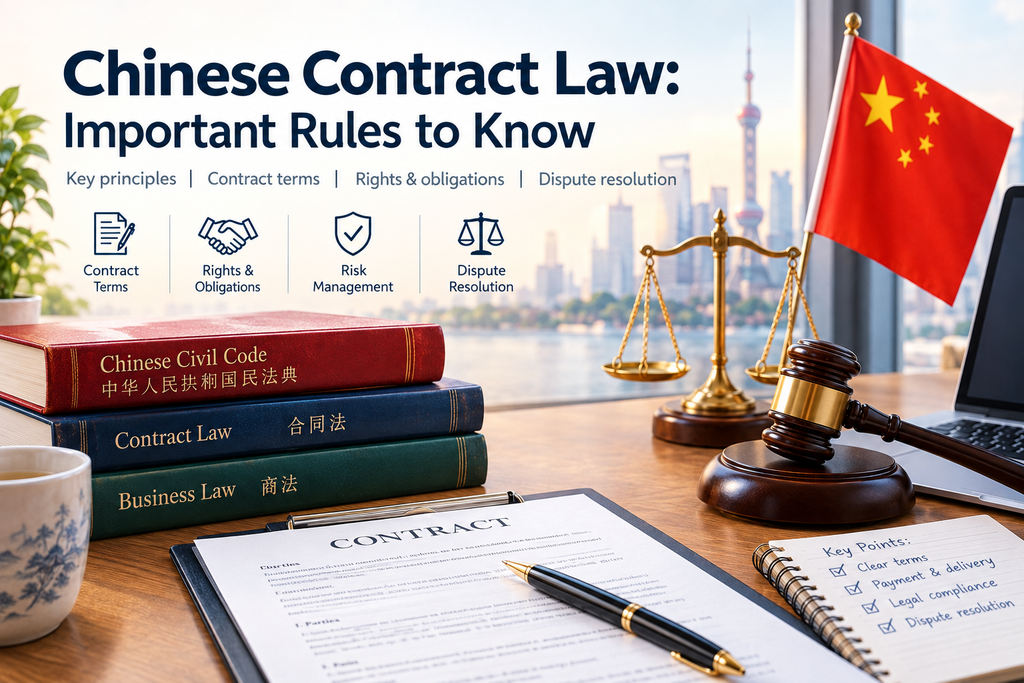
Contracts are essential to commercial relationships because they establish the responsibilities of the parties and provide a framework for handling disagreements.
China’s Civil Code contains extensive provisions relating to contracts, including contractual performance, changes to agreements, and liability for breaches.
Clear terms and responsibilities
A well-prepared contract should identify the parties and explain what each party must do. Important details may include product specifications, delivery dates, payment schedules, service standards, and acceptance procedures.
Unclear wording can create misunderstandings, particularly when the parties operate in different countries or speak different languages.
Payment and delivery conditions
Payment provisions should explain when payment is due, which currency applies, and what documentation may be required. Delivery terms should identify the expected schedule and explain how delays, damaged products, or defective goods will be addressed.
Dispute resolution clauses
Contracts should explain how disputes will be handled. Depending on the transaction, the parties may consider litigation, arbitration, or another legally appropriate method.
Governing-law provisions and dispute-resolution clauses should be reviewed carefully to assess their suitability and enforceability.
Language and translation
International contracts may be prepared in Chinese and another language. If both versions are legally authoritative, the parties should ensure that the wording is consistent and clarify how differences between versions will be resolved.
Professional legal translation and review can help prevent costly misunderstandings.
4. Intellectual Property Protection in China
Intellectual property is an important consideration for businesses that develop products, create content, manufacture goods, or sell branded services.
Intellectual property rights include trademarks, patents, and copyrights, among other legally protected interests. Each category protects different subject matter and follows its own rules.
Trademarks
Trademarks help distinguish a company’s goods or services from those of other businesses. A company entering the Chinese market should consider whether it needs to register its brand name, logo, Chinese-language brand name, or other identifying marks.
Registration requirements and procedures depend on the applicant’s circumstances and the type of mark. Foreign applicants may need to use an appropriately qualified trademark agency under applicable rules.
Patents
Patents may protect qualifying inventions, utility models, or designs. Businesses developing technology or manufacturing products should assess whether patent protection is appropriate before publicly disclosing sensitive information.
Copyright
Copyright may protect qualifying creative works, including articles, photographs, illustrations, software, and other original expression. Businesses should maintain appropriate records concerning authorship, ownership, licensing, and permissions.
The China National Intellectual Property Administration is a useful official resource for learning about China’s intellectual property system.
Early planning can help businesses protect their assets, although the best strategy depends on the type of right, intended commercial activities, and available legal remedies.
5. Chinese Law CNLawBlog: How to Find Reliable Legal Information
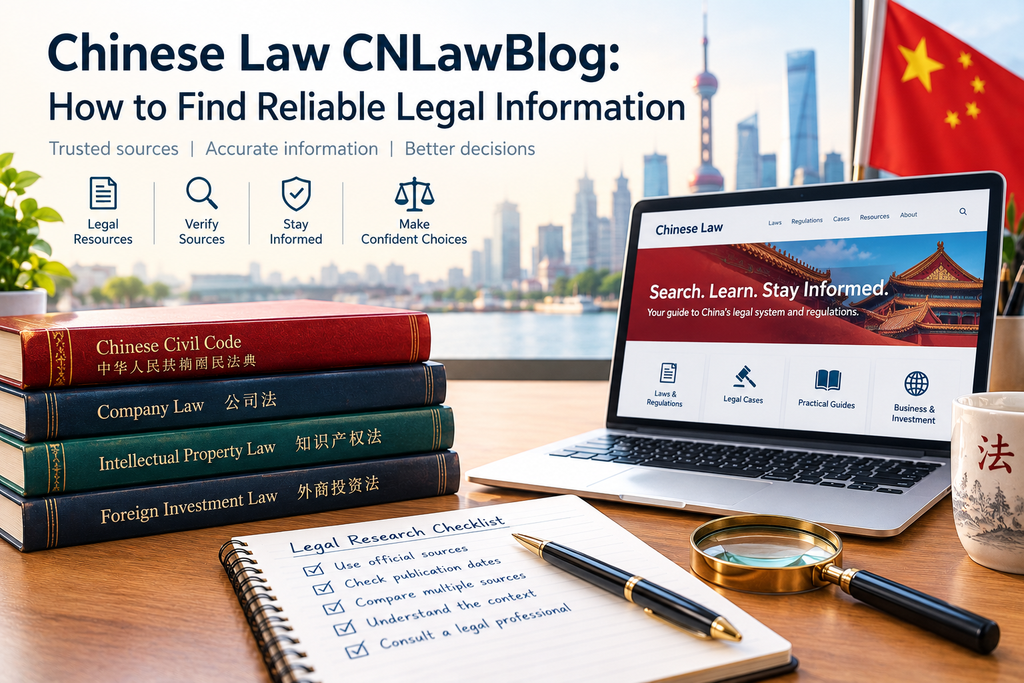
When researching Chinese law, the quality of the source matters as much as the explanation itself. A clear blog post may introduce a legal subject, but important decisions should be based on current and authoritative information.
Readers researching Chinese Law CNLawBlog: Essential Legal Insights can use several practical steps to evaluate legal content.
- Start with official sources. Government websites and relevant regulatory authorities are useful places to find legislation, regulations, and official announcements.
- Check publication dates. Older articles may not reflect recent amendments or changes in regulatory practice.
- Identify the source of each claim. Determine whether the information comes from legislation, an administrative regulation, a judicial interpretation, or a secondary commentary.
- Compare important details. For matters with financial or legal consequences, consult the primary source and seek professional advice when appropriate.
- Consider the context. Rules applying to one industry, region, or type of transaction may not apply in the same way to another.
It is also important to assess the credibility of any website providing legal explanations. Check its authorship, references, update practices, and whether it clearly distinguishes established legal requirements from general commentary.
Readers who want to explore additional business and general-interest topics can also visit Urban Splatter, which offers articles across a range of subjects. For legal decisions involving China, however, official legal sources and qualified professional advice should take priority.
6. Employment Law and Workplace Responsibilities
Employment law is another important area for companies and workers. Employers need to understand their responsibilities when hiring staff, preparing employment contracts, managing working hours, paying wages, and ending employment relationships.
Employees may also need information about compensation, leave, workplace protections, social insurance, and procedures for resolving employment disputes.
Businesses operating in China should ensure that employment documents and workplace policies comply with applicable requirements. A generic template downloaded from the internet may not reflect the company’s location, employment arrangement, or current legal obligations.
International employers should take particular care when transferring staff, hiring local employees, or managing cross-border work arrangements. Employment, immigration, and tax rules may interact, meaning that a decision in one area can affect another.
Keeping accurate records and documenting important workplace decisions can help employers and employees understand their rights and responsibilities.
When a dispute arises, the parties should review the applicable legal requirements and consider obtaining advice from a qualified professional.
7. Foreign Investment and Cross-Border Business
China’s market offers opportunities for some international businesses, but foreign investment requires careful legal planning.
Applicable rules may depend on the industry, proposed ownership structure, location, and activities the business intends to conduct. Some sectors may have additional access restrictions or regulatory requirements.
Foreign companies should investigate matters such as business establishment, permitted business scope, licensing, capital arrangements, taxation, intellectual property, and cross-border payments.
China’s Foreign Investment Law provides a useful starting point for understanding the legal framework relating to foreign investment.
Nevertheless, reading one law is not enough to determine whether a proposed investment meets every requirement. Businesses should assess the relevant regulations and seek advice based on their specific industry and proposed structure.
Careful preparation can help companies identify potential barriers, understand their obligations, and reduce uncertainty before committing substantial resources.
8. Advantages and Challenges of Understanding Chinese Law
Learning about Chinese law can provide practical benefits, but online research also has limitations.
Advantages of legal awareness
- Better decision-making: Legal knowledge helps individuals and businesses identify relevant obligations before acting.
- Improved contract management: Understanding contractual terms can reduce misunderstandings between business partners.
- Stronger risk planning: Early research may reveal licensing, employment, intellectual property, or compliance concerns.
- More effective communication: Familiarity with legal terminology can make discussions with lawyers and business partners more productive.
Challenges to consider
- Language differences: Translations may not fully communicate the meaning or nuance of the original Chinese legal text.
- Changing requirements: Laws, regulations, and administrative practices may change over time.
- Complex interpretation: A legal rule may depend on exceptions, procedures, related legislation, and specific facts.
- Unreliable online information: Some articles may be outdated, oversimplified, or unsupported by primary sources.
The most effective approach combines accessible educational content with careful verification and professional advice when necessary.
9. Practical Tips for Readers and Business Owners
Anyone researching Chinese law can improve their process by following a few straightforward practices.
Define the exact legal question. Researching general contract principles is different from determining whether a particular contract clause is enforceable.
Identify the relevant circumstances. The parties, location, industry, transaction, and timeline may affect which legal requirements apply.
Check current primary sources. Look for official legislation and regulations, and confirm whether the relevant provisions have been amended or replaced.
Maintain organized documentation. Contracts, invoices, correspondence, registration documents, and other records may be important when evaluating rights and responsibilities.
Seek qualified advice when needed. Matters involving substantial financial exposure, regulatory obligations, employment disputes, or litigation often require a lawyer who understands the relevant area of Chinese law.
Avoid relying on a single online article. Blog posts can help explain unfamiliar terminology, but they should not be the only basis for important legal decisions.
These habits help readers approach legal questions systematically instead of relying on assumptions or outdated information.
10. The Future of Legal Information and Digital Resources

Digital publishing has changed how people discover and learn about legal topics. Readers can now access government publications, legal commentary, educational articles, and professional resources online.
This accessibility can make legal information easier to find, particularly for people who are new to a subject. Search engines also allow users to investigate specific questions, compare explanations, and identify relevant official resources.
However, accessibility does not automatically guarantee accuracy. Some online content may be incomplete, poorly sourced, or no longer current. Automated summaries can also miss exceptions and important legal distinctions.
For this reason, digital legal resources are most useful when they help readers understand the subject and locate reliable primary materials.
A responsible approach combines clear explanations, transparent sourcing, regular updates, and careful verification. These practices are valuable for legal publishers and readers alike.
Frequently Asked Questions
1. What is Chinese Law CNLawBlog?
Chinese Law CNLawBlog is the focus topic for exploring Chinese legal information and practical explanations of legal issues. Readers should verify the identity, credibility, and currency of any particular website they use.
2. What does China’s Civil Code cover?
China’s Civil Code covers several major areas of civil law, including property rights, contracts, personality rights, marriage and family, inheritance, and tort liability.
3. Can foreign businesses enter contracts with Chinese companies?
Foreign businesses can enter commercial agreements with Chinese companies, subject to applicable laws and regulatory requirements. Contract terms, governing law, dispute resolution, and enforceability should be reviewed carefully.
4. How can a company protect intellectual property in China?
A company should identify its relevant intellectual property rights and consider appropriate registration, documentation, licensing, and enforcement strategies. The right approach depends on the type of intellectual property and the company’s circumstances.
5. Is an online legal blog enough to make a legal decision?
No. A legal blog can provide background information, but important decisions should be checked against current authoritative sources and, where appropriate, reviewed by a qualified lawyer.
Conclusion
Chinese Law CNLawBlog: Essential Legal Insights highlights why understanding China’s legal framework matters to individuals, entrepreneurs, and international businesses. Contract law, intellectual property, employment rules, and foreign investment requirements can all influence everyday decisions and long-term commercial plans.
Reliable legal research starts with clear questions, current sources, and an understanding of the circumstances in which a rule applies. Educational articles can make complicated subjects easier to approach, but they should not replace legislation or professional legal advice.
By checking official materials, keeping accurate records, and seeking qualified assistance when necessary, readers can make more informed decisions about legal matters involving China.
The key takeaway is simple: use online legal content to build understanding, verify important claims through authoritative sources, and obtain professional advice before relying on legal conclusions.