



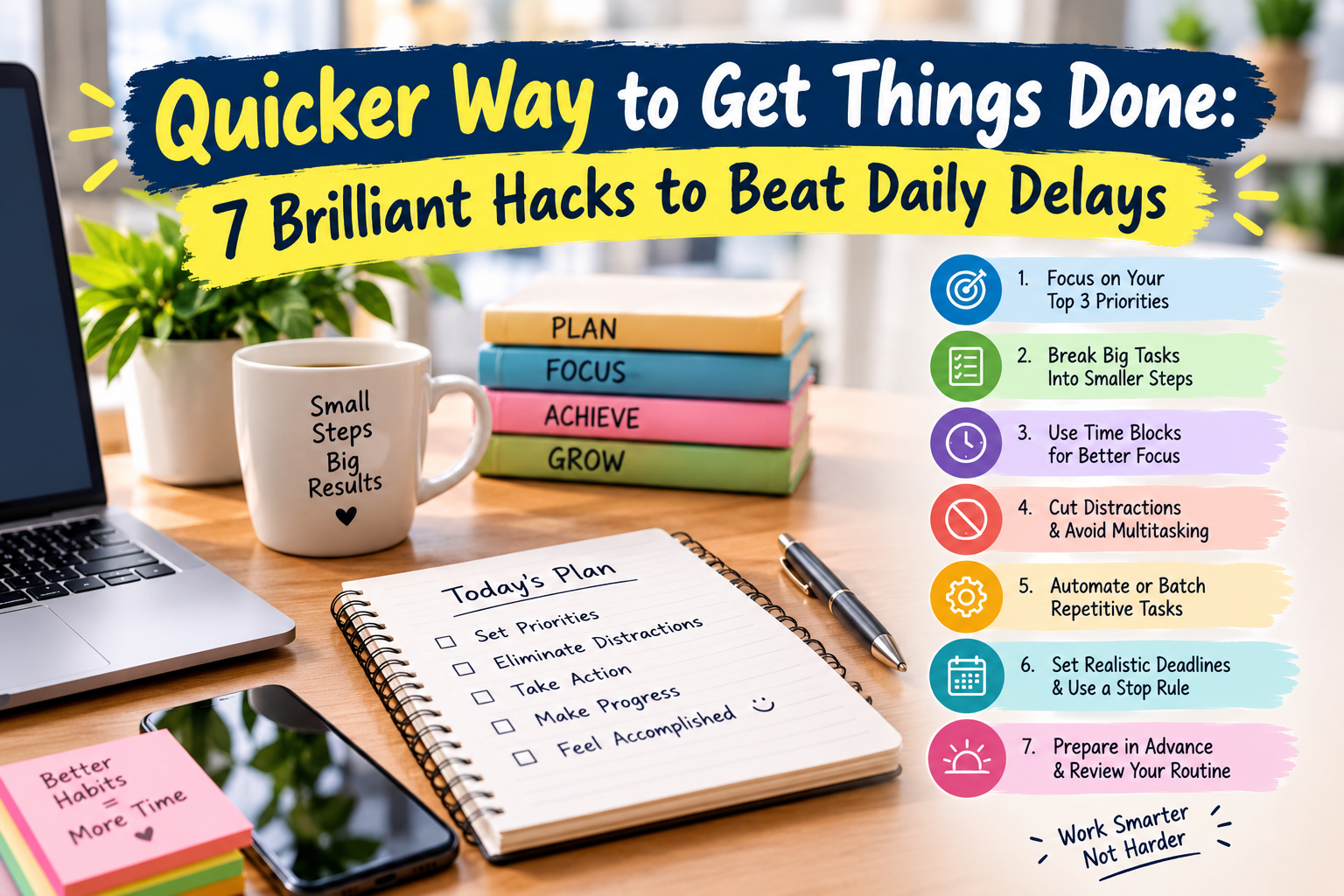
Finding a quicker way to get things done can make everyday life easier, whether you are managing work deadlines, household responsibilities, studies, or personal goals. The key is not to rush through everything. It is to reduce unnecessary effort, make better decisions, and focus on tasks that matter most.
Many people lose valuable time by switching between activities, checking notifications, delaying difficult work, or trying to do too many things at once. These habits can make even a simple day feel overwhelming. Fortunately, a few practical changes can help you work more efficiently without sacrificing quality.
In this guide, you will discover seven useful hacks to speed up daily tasks, manage your time more effectively, and build a routine that feels productive rather than exhausting.
Why Finding a Quicker Way to Work Matters
Working efficiently means getting meaningful results with less wasted time and energy. It does not mean completing every task as quickly as possible or keeping yourself busy throughout the day.
A more effective routine helps you identify priorities, organize your workload, and avoid distractions. For example, preparing tomorrow’s task list in the evening may prevent you from spending the first part of your morning deciding what to do.
Better time management can also reduce stress. However, speed should never replace accuracy. Important work, financial decisions, and safety-related tasks deserve careful attention. The goal is to remove unnecessary steps, not skip essential ones.
7 Brilliant Hacks to Find a Quicker Way to Get Things Done
1. Plan Your Day Around Three Main Priorities
A long to-do list can make you feel productive while leaving your most important responsibilities unfinished. Instead of treating every task as equally urgent, identify the three outcomes that matter most each day.
At the beginning of your morning or the night before, ask yourself:
- What must be completed today?
- Which task will have the greatest impact?
- What can be postponed, delegated, or removed?
For example, if you work from home, your priorities might include finishing a client report, responding to important emails, and preparing a project proposal. Minor administrative tasks can wait until these responsibilities are under control.
Why it works: You spend less time deciding what to do next and more time completing meaningful work.
2. Break Large Tasks Into Smaller Steps
A large task can feel difficult because the finish line seems far away. When a project looks complicated, you may delay starting it or spend too much time thinking about how to approach it.
The solution is to divide it into smaller, specific actions.
Instead of writing “complete the presentation” on your task list, break it down into gathering information, creating an outline, drafting slides, adding visuals, and reviewing the final version.
This method works for household chores, assignments, reports, and personal projects. If a task still feels overwhelming, make the first step even smaller.
For example, “open the document and write the first paragraph” is a more manageable starting point than “finish the entire report.”
Practical tip: Define the next action whenever you add a task to your list. Clear actions are easier to start than vague goals.
3. Use Time Blocks to Protect Your Focus
Time blocking means reserving a specific period for a particular activity. Rather than moving randomly between tasks, you decide in advance when you will work on each one.
You might reserve 30 minutes for email, 60 minutes for focused work, and 20 minutes for administrative tasks. Adjust these periods according to the complexity of the work and your concentration levels.
During a time block, silence unnecessary notifications, close unrelated browser tabs, and keep only the materials you need nearby.
You can also experiment with 25 minutes of focused work followed by a five-minute break. If a task requires deeper concentration, longer sessions may suit you better.
Time blocking should not make every minute rigid. Leave room for unexpected requests, breaks, and tasks that take longer than expected.
Why it works: A defined work period creates a clear starting point and reduces the temptation to postpone important activities.
4. Reduce Multitasking and Unnecessary Distractions
Switching repeatedly between tasks can interrupt your concentration. You might start writing a report, check a message, open social media, and then return to the report without remembering exactly where you stopped.
Instead of multitasking, try completing one meaningful task before moving to another whenever practical.
A few simple changes can help:
- Put your phone on silent during focused work.
- Turn off nonessential app notifications.
- Check email at planned intervals.
- Keep unrelated browser tabs closed.
- Let colleagues or family members know when you need uninterrupted time.
Research published by Microsoft Research on blocking workplace distractions examined how limiting online distractions affected workers’ focus and perceived productivity. The findings support considering distraction management as part of a practical productivity routine, although individual results may vary.
Not every activity requires complete silence. Combining simple activities, such as listening to an audio lesson while folding laundry, may be practical. However, avoid combining activities that both require attention, especially when driving or handling equipment.
The key lesson: Protect your attention as carefully as you protect your time.
5. Automate or Batch Repetitive Tasks
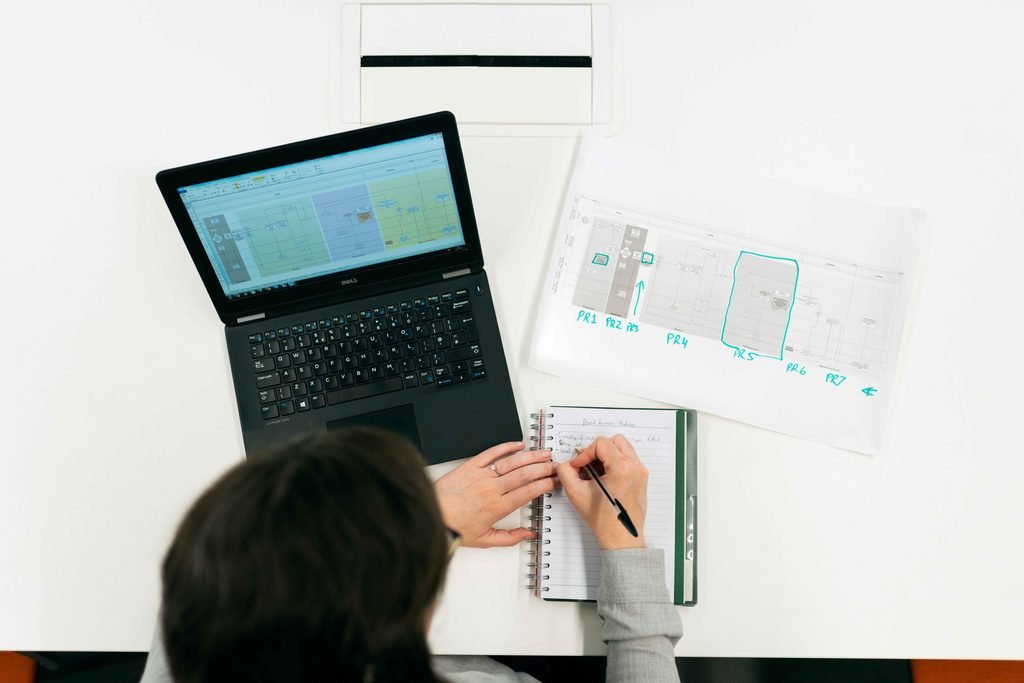
Some daily responsibilities follow the same pattern. Repeating each one from scratch wastes time that could be used for more valuable work.
Look for tasks that can be automated, standardized, or grouped together. For example, you can use calendar reminders, create reusable email templates, save document formats, and prepare a weekly shopping list.
Batching is especially useful when several tasks require the same tools or type of attention. You might answer routine messages together, process invoices in one session, or prepare several content drafts at once.
Businesses can also save time by improving their technology systems and outsourcing suitable technical responsibilities. For organizations reviewing these options, this guide to the top 8 best managed IT services providers offers a related resource for exploring professional IT support. Managed IT services are particularly relevant when technical issues or system maintenance repeatedly interrupt everyday business operations.
Automation should still be used thoughtfully. Review recurring payments, check automated messages, and protect sensitive information. An automated mistake can repeat just as easily as a successful process.
Why it works: Once a routine is established, you spend less effort remembering, setting up, and repeating the same steps.
6. Set Realistic Deadlines and Use a Stop Rule
Without a clear deadline, small tasks can expand to fill the available time. You might spend an hour adjusting a document that needed only a quick review.
Give tasks realistic time limits based on their importance and complexity. For example, you could reserve 20 minutes to organize your inbox or 45 minutes to draft an initial outline.
A deadline should guide your effort, not force you to sacrifice quality. If a task is more complex than expected, reassess the time rather than rushing through important details.
A useful strategy is to define what “finished” means before starting. For a routine email, finished might mean answering the question clearly, checking the recipient, and proofreading once. It probably does not require rewriting the message ten times.
Use a stop rule for low-risk tasks: once the required standard has been met, move on. For high-stakes work, follow the necessary review process instead of imposing an arbitrary stopping point.
Why it works: Clear boundaries help prevent perfectionism from consuming time that should be spent elsewhere.
7. Prepare in Advance and Review Your Routine
One of the simplest ways to speed up tomorrow is to remove avoidable decisions today.
Spend five to ten minutes preparing for the next day. Check your calendar, choose your main priorities, gather the materials you need, and identify deadlines that require early attention.
You can apply the same approach to everyday life. Prepare your work bag in the evening, lay out clothes before a busy morning, or plan several meals at once.
At the end of the week, review what worked and what did not. Ask yourself which tasks took longer than expected, what interrupted your concentration, and which activities could be simplified or delegated.
Do not attempt to change every habit at once. Choose one or two improvements, test them, and keep the ones that genuinely help.
Why it works: Regular preparation reduces last-minute decisions, while reviewing your routine helps you improve your system over time.
Advantages and Disadvantages of Speeding Up Daily Tasks
Using a quicker way to manage responsibilities offers several benefits, but efficiency methods also have limitations.
Advantages
- More available time: Completing routine work efficiently creates space for rest, family, learning, and important projects.
- Better organization: Priorities and deadlines make responsibilities easier to manage.
- Less unnecessary stress: A clear plan can reduce the feeling of constantly falling behind.
- More consistent progress: Smaller steps make it easier to work toward larger goals.
Disadvantages and Risks
- Rushing can cause mistakes: Working too quickly may reduce accuracy when a task needs careful attention.
- Overplanning can waste time: A productivity system should simplify your day, not become another complicated responsibility.
- Rigid schedules can create pressure: Unexpected events may disrupt even a well-planned routine.
- Not every task should be accelerated: Complex, creative, sensitive, or safety-critical work may require patience and detailed review.
The best approach is to speed up repetitive, low-value steps while giving important work the time it deserves.
Common Mistakes That Make Daily Tasks Take Longer
Even useful productivity methods can fail when applied without thought. Watch out for these common problems.
Making an unrealistic to-do list: Listing more tasks than you can reasonably complete often leads to frustration. Estimate your available time and leave room for unexpected work.
Checking messages constantly: Frequent interruptions make it harder to maintain attention. Set reasonable times to check routine communications while remaining available for genuine emergencies.
Trying every productivity trick at once: Changing your calendar, task manager, schedule, and work habits simultaneously can become overwhelming. Introduce one improvement at a time.
Confusing activity with progress: A busy day is not necessarily a productive day. Measure progress by meaningful results, not by the number of tasks you touch.
Skipping breaks: Rest is part of sustainable performance. When concentration drops, a short break can be more useful than forcing yourself to continue working ineffectively.
Frequently Asked Questions
What is the quickest way to get things done?
Start by choosing your three most important priorities, breaking large tasks into smaller actions, and removing distractions. These steps provide a practical starting point without requiring a complicated productivity system.
How can I finish daily tasks faster without feeling stressed?
Use realistic deadlines, plan short breaks, and avoid filling every minute with work. Focus on completing important tasks well rather than trying to finish everything at once.
Does multitasking save time?
Sometimes, combining simple activities is practical. However, switching between tasks that require concentration can interrupt your focus. Completing one important task at a time is often a better approach.
Which productivity habit should I start with?
Begin with a short daily planning routine. Choose three priorities and decide when you will work on them. Once this becomes manageable, add time blocking or another technique.
How can I maintain productivity over time?
Choose habits that fit your schedule, review your progress regularly, and adjust your approach when necessary. Sustainable routines are more useful than short bursts of intense effort.
Conclusion
Finding a quicker way to get things done starts with making your daily routine simpler and more intentional. Prioritizing important work, breaking projects into manageable steps, protecting your concentration, automating repetitive tasks, and preparing in advance can all help you use your time more effectively.
Remember that productivity is not about rushing through every responsibility. It is about achieving meaningful results without wasting energy on unnecessary steps. Start with one or two of these seven hacks, observe what improves your day, and build from there.
The best routine is one that helps you work efficiently while leaving enough time for rest, relationships, and the things that matter outside your to-do list.