



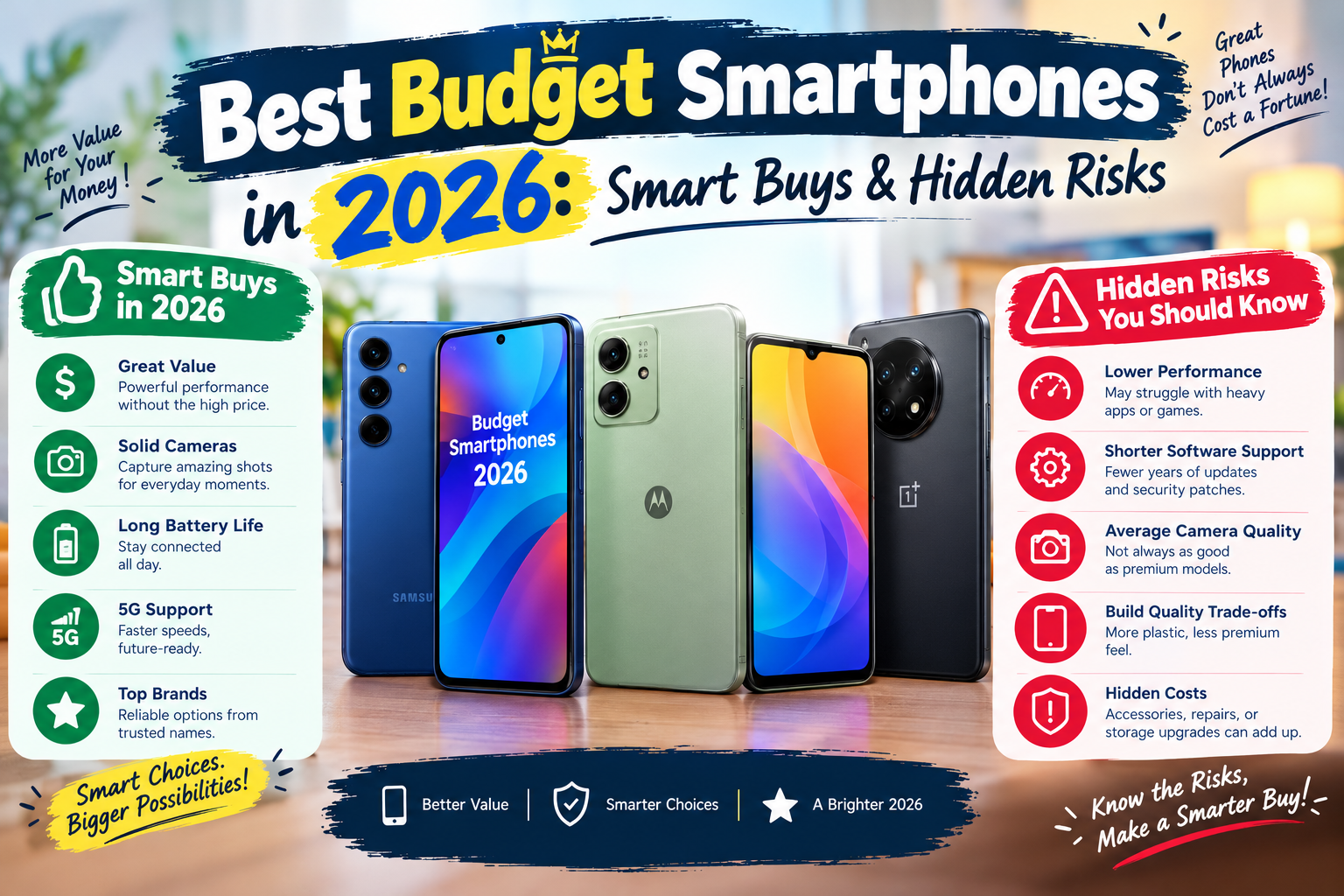
Buying a good phone does not have to mean spending flagship-level money. The Best Budget Smartphones in 2026 offer useful features such as smooth displays, capable cameras, dependable battery life, and long-term software support at accessible prices. However, not every affordable phone is worth buying. Some models compromise on performance, camera quality, charging speed, or future updates to keep costs down.
The right choice depends on how you use your phone. Students may prioritize battery life and storage, photography lovers may want reliable cameras, and gamers may need a stronger processor. This guide explores smartphones worth considering, their advantages and drawbacks, and the features that matter most before you buy.
Note: Prices, configurations, and availability vary by country and retailer. Check your local market before purchasing.
What Makes the Best Budget Smartphones in 2026 Worth Buying?
A budget phone should provide dependable everyday performance rather than simply advertise impressive specifications. A large camera number or a high-capacity battery does not automatically make a device better.
Before choosing a model, consider these essential features:
- Performance: Look for a processor that can handle your everyday apps, browsing, video streaming, and multitasking.
- Battery life: A battery around 5,000mAh is common in this segment, although real-world endurance also depends on software and screen efficiency.
- Display quality: An AMOLED screen generally provides deeper blacks and richer contrast than a standard LCD. A higher refresh rate can make scrolling feel smoother.
- Storage and RAM: For many buyers, 128GB of storage is a sensible starting point. More storage is useful if you record videos or install large games.
- Software support: Security updates help protect your device, while operating-system updates can introduce useful features.
- Build quality: Water resistance, durable glass, and a comfortable design can make a phone more practical over several years.
A balanced phone with reliable software and adequate storage may provide better long-term value than a cheaper device with one impressive specification.
Best Budget Smartphones in 2026: Top Models to Consider
The following options serve different needs. They are not all equally affordable, so compare their local prices rather than assuming one model is automatically the best deal.
Google Pixel 10a: A Strong Choice for Photography
The Google Pixel 10a is worth considering if camera quality, a clean Android experience, and software longevity matter to you. Google’s published specifications list a 6.3-inch pOLED display, a 5,100mAh typical battery, 8GB of RAM, and storage options of 128GB or 256GB. Google also promises seven years of operating-system, security, and Pixel Drop updates.
Its camera software and image-processing features make it an appealing option for everyday photos, portraits, and challenging lighting conditions.
Advantages
- Strong photography features and useful image-editing tools.
- Bright display with a refresh rate of up to 120Hz.
- Long software-support commitment.
- Water and dust resistance rated IP68.
Drawbacks
- Its price may be too high for buyers seeking an entry-level phone.
- Charging accessories may need to be purchased separately.
- Availability and repair support vary by market.
Best for: People who prioritize photography and long-term software support.
Official specifications: Google Pixel 10a.
Samsung Galaxy A37 5G: A Balanced Everyday Phone
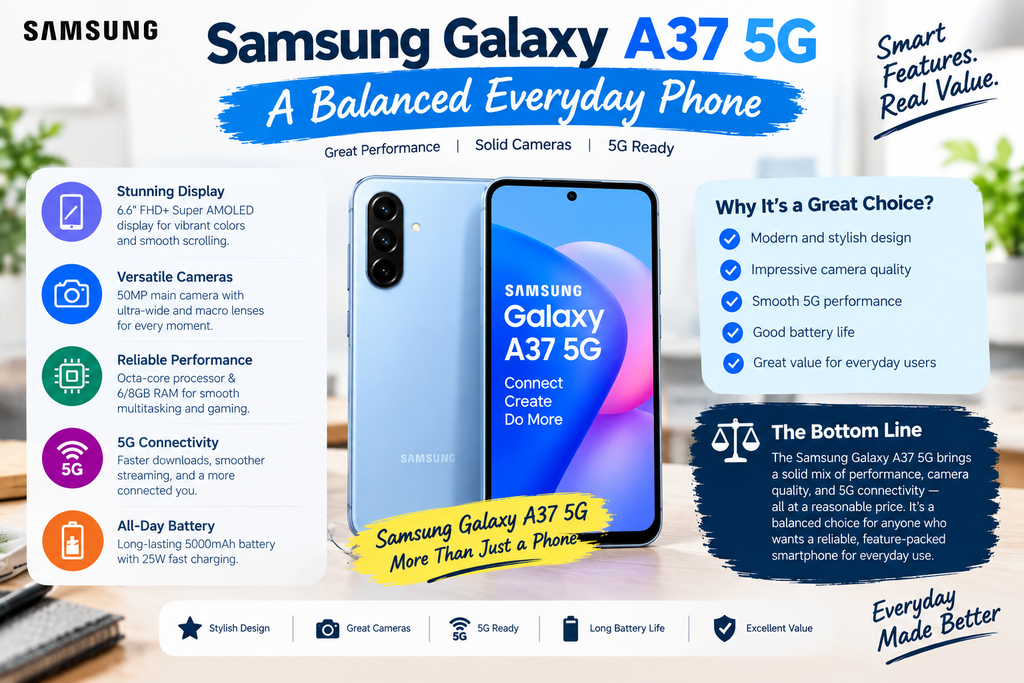
The Samsung Galaxy A37 5G is an option for buyers who want a large display, 5G connectivity, and a familiar Android experience. Samsung’s published specifications list a 6.7-inch Super AMOLED display with a 120Hz refresh rate, a 5,000mAh battery, and a 50MP main rear camera with optical image stabilization.
These features make it suitable for messaging, browsing, video streaming, and casual photography. Optical image stabilization can also help reduce blur caused by small hand movements in supported shooting conditions.
Advantages
- Large, colorful AMOLED display.
- 5G connectivity in supported markets.
- Main camera with optical image stabilization.
- A practical choice for everyday use.
Drawbacks
- Large-screen phones may be less comfortable for one-handed use.
- Secondary cameras may be less useful than the main camera.
- Its value depends on the local selling price and competing models.
Best for: Buyers who want a balanced Samsung phone for daily use.
Official specifications: Samsung Galaxy A37 5G.
Motorola Moto G Power (2026): A Battery-Focused Option
Battery life is a priority for people who spend long hours away from a charger. The Motorola Moto G Power (2026) offers a 5,200mAh battery, a 6.8-inch Full HD+ display with a 120Hz refresh rate, 8GB of RAM, and 128GB of built-in storage, according to Motorola’s specifications.
It also supports microSD expansion, which can be useful for storing photos, videos, and downloaded media. Its large screen is suitable for watching videos and reading, while its durability features may appeal to people who want a more resilient everyday device.
Advantages
- Large battery designed for extended use.
- Smooth 120Hz display.
- Expandable storage.
- Listed water and dust protection features.
Drawbacks
- Its large body and weight may not suit everyone.
- The LCD panel does not provide the same contrast as an AMOLED display.
- Demanding games may perform better on phones with stronger processors.
Best for: Users who prioritize battery capacity, a large screen, and practical storage.
Official specifications: Motorola Moto G Power (2026).
Apple iPhone 17e: An Affordable Route Into iOS
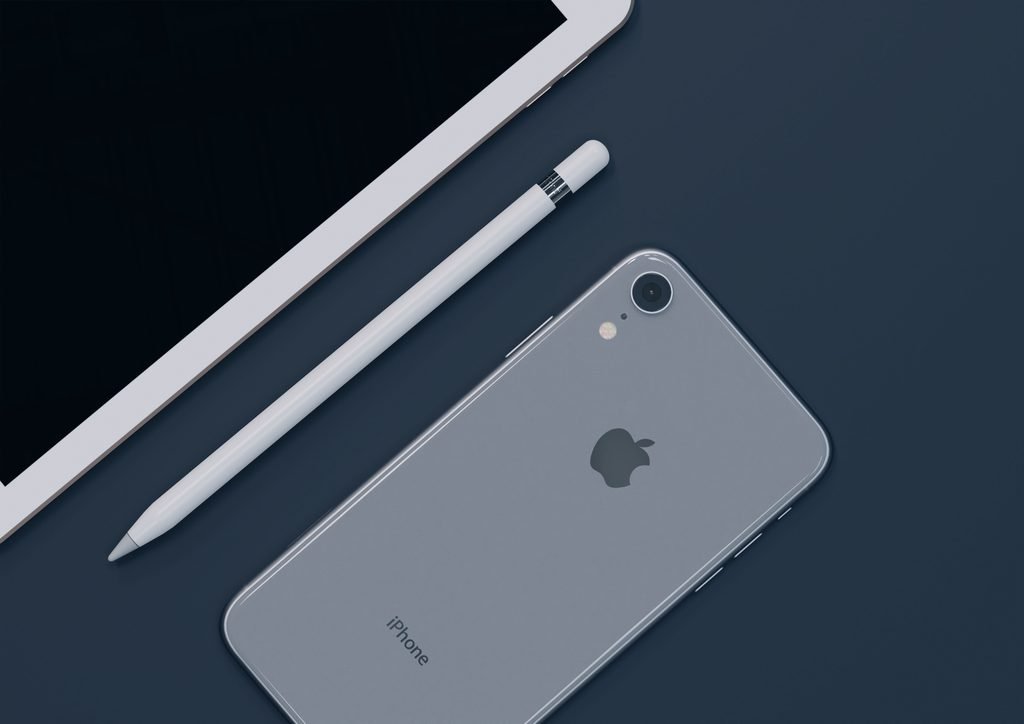
The iPhone 17e may suit people who prefer Apple’s software, already use Apple devices, or want access to iOS apps and services. Its appeal is the combination of the iOS ecosystem and a modern processor rather than a long list of camera lenses or advanced display features.
However, “affordable” is relative. Its price may still exceed the budget of someone shopping for a basic Android phone.
Advantages
- Access to the iOS ecosystem and its apps.
- A practical option for people already using Apple devices.
- Modern performance for everyday applications.
Drawbacks
- It may cost more than comparable entry-level Android models.
- Display and camera features should be compared carefully.
- Accessories, repairs, and storage upgrades can increase the overall cost.
Best for: Buyers who specifically want iOS without paying for a more expensive iPhone model.
Check Apple’s current regional pricing and specifications before purchasing, as configurations and offers can differ between markets.
Nothing Phone (4a) Pro: For Buyers Who Value Design
The Nothing Phone (4a) Pro is worth comparing if you want a distinctive design and a phone that looks different from conventional budget devices. Its value should be judged against its actual local price and the alternatives available.
Do not pay extra for appearance alone. Compare its processor, display, cameras, battery endurance, charging, and software-support period with similarly priced phones before deciding.
Advantages
- Distinctive styling for buyers who prefer a different design.
- An alternative to more conventional budget-phone options.
- Worth considering when its features and local price align with your needs.
Drawbacks
- A unique design does not guarantee better everyday performance.
- Price and availability can vary considerably by market.
- Camera quality and battery life should be checked in independent reviews.
Best for: Buyers who value design but still want to compare practical features before spending more.
Official support information: Nothing Phone (4a) Pro.
How to Choose the Right Affordable Smartphone
Comparing the Best Budget Smartphones in 2026 becomes easier when you begin with your own priorities instead of the marketing claims on a product box.
For Everyday Use and Students
If you mainly use WhatsApp, email, web browsers, online classes, and video platforms, focus on stable performance, sufficient storage, a comfortable display, and good battery life. You may not need an expensive processor or advanced camera system.
A phone with 128GB of storage can be a sensible starting point, especially if you keep photos and videos on the device. If you regularly download large files, consider a higher-capacity version or expandable storage.
For Photography and Social Media
Do not choose a phone solely because its main camera has more megapixels. Image processing, lens quality, stabilization, autofocus, and low-light performance can have a greater effect on your results.
Look for independent sample photos and videos. Check whether skin tones look natural, moving subjects remain sharp, and video stabilization works well while walking.
For Gaming and Multitasking
The processor, graphics performance, RAM, cooling, and display response matter more than the number of cameras. Casual games can run well on many inexpensive devices, but demanding 3D games may require a more powerful model.
Check reviews that test the games you actually play. Also consider how warm the phone becomes during longer sessions and whether performance drops over time.
For Long-Term Ownership
Software support can affect a phone’s value just as much as its hardware. Before buying, check the manufacturer’s update policy for the exact model and region. A lower-priced device may become less attractive if security support ends sooner or replacement parts are difficult to obtain.
Technology is not just about buying the newest or most expensive device; it is also about understanding which level of technology meets a practical need. For a broader explanation of technology categories and their uses, read this complete guide to medium technology. This broader perspective can help readers think more carefully about choosing technology based on usefulness, cost, and everyday requirements.
For device security, the Cybersecurity and Infrastructure Security Agency (CISA) also provides guidance on protecting devices and online accounts.
Advantages and Disadvantages of Budget Smartphones
Affordable phones have improved, but buyers still need realistic expectations.
Advantages
- Lower upfront cost than premium flagship phones.
- Plenty of performance for messaging, browsing, streaming, and routine tasks.
- Large batteries and high-refresh-rate displays are available on selected models.
- More choice across Android and iOS price categories.
- Less financial pressure if you need a phone primarily for essential tasks.
Disadvantages
- Camera quality can drop noticeably in low light.
- Some models use slower processors or less capable secondary cameras.
- Charging speeds and included accessories vary.
- Software-support periods differ by manufacturer and model.
- Certain low-cost phones may have limited water resistance or less durable materials.
The best purchase is not necessarily the cheapest device. It is the phone that meets your needs reliably without making you pay for features you will rarely use.
Smart Buying Tips to Avoid Costly Mistakes
Before placing an order, use these practical checks:
- Compare the final price. Include delivery, accessories, taxes, and any applicable import costs.
- Check the exact variant. RAM, storage, network bands, and other features can differ between regional versions.
- Confirm warranty coverage. Check whether the seller provides an official local warranty and whether repairs are available nearby.
- Read recent independent reviews. Look for battery tests, camera samples, gaming performance, and long-term software feedback.
- Avoid suspiciously cheap listings. Verify the seller, return policy, device condition, and whether the phone is new or refurbished.
- Consider last year’s models. A discounted older phone can be a good purchase if its remaining software support, battery condition, and performance are acceptable.
If you are purchasing in Pakistan, also verify PTA approval and local network compatibility before paying for a device. An attractive imported-phone price may not represent good value if registration costs or connectivity limitations apply.
Frequently Asked Questions
Which are the best budget smartphones in 2026?
The best choice depends on your priorities. The Google Pixel 10a is worth considering for photography and software support, the Samsung Galaxy A37 5G for a balanced everyday experience, and the Motorola Moto G Power (2026) for battery-focused use. Compare local prices before choosing.
Are budget smartphones good for gaming?
Many can handle casual games, but performance varies. For demanding games, compare the processor, graphics performance, RAM, cooling, and real-world gaming tests rather than relying on advertised specifications alone.
How much storage should a budget phone have?
For many people, 128GB is a practical starting point. If you record lots of videos, download large games, or keep extensive media libraries, consider 256GB or a model with supported expandable storage.
Is a budget Android phone better than a cheap iPhone?
Neither is automatically better. Android offers a wide range of prices and hardware features, while an iPhone may be preferable for someone who values iOS and the Apple ecosystem. Compare the total cost, software support, battery condition if used, and features you will actually use.
Should I buy a budget phone online?
Online shopping can offer useful price comparisons, but verify the seller’s reputation, return policy, warranty, device condition, and regional compatibility. Avoid making a purchase based on a low price alone.
Conclusion
The Best Budget Smartphones in 2026 can provide dependable performance, useful cameras, smooth displays, and strong battery life without requiring a flagship-sized budget. The Google Pixel 10a, Samsung Galaxy A37 5G, Motorola Moto G Power (2026), iPhone 17e, and Nothing Phone (4a) Pro each appeal to different types of buyers, so the right choice depends on price, availability, and personal priorities.
Before making your decision, compare real-world reviews, update policies, storage options, warranty coverage, and the total cost of ownership. A thoughtful purchase can help you avoid disappointing compromises and get better value from your next smartphone.