



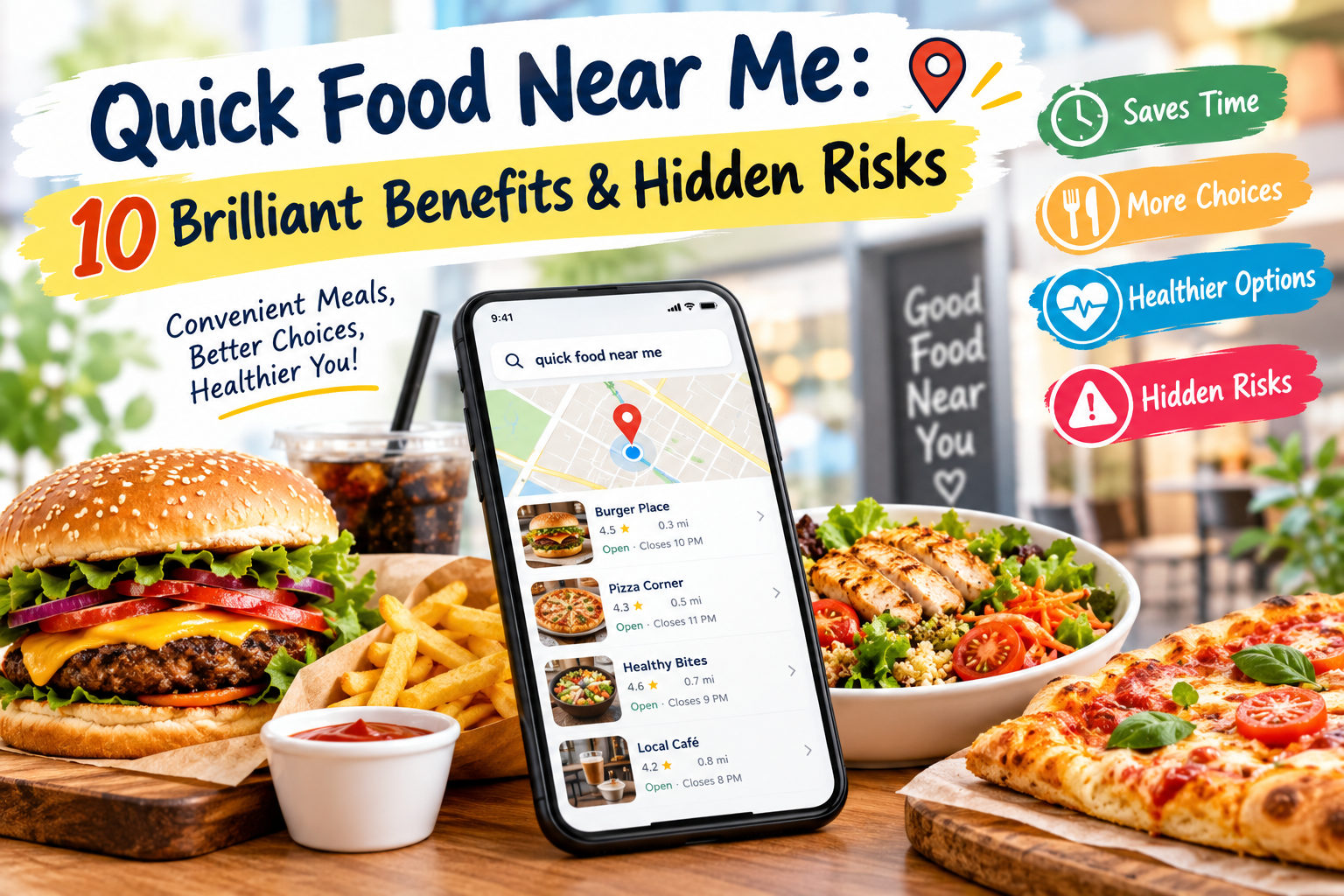
Quick food near me is a useful search phrase when you need a convenient meal without spending too much time travelling, cooking, or planning. Whether you are taking a short lunch break, travelling with family, finishing a busy workday, or exploring a new area, finding nearby food can make your day easier.
From local cafés and takeaway counters to fast-food restaurants and healthier meal options, nearby food providers offer plenty of choices. However, convenience is only one factor to consider. Price, nutritional value, portion size, food safety, and service quality can all influence whether a meal is worth choosing.
Understanding the benefits and potential drawbacks of convenient meals can help you make smarter decisions. Here are ten important facts about finding nearby food, along with practical tips for choosing meals that suit your schedule, budget, and preferences.
Why People Search for Quick Food Near Me
People often search for quick food near me because they want something convenient and accessible. Instead of travelling across town, they can compare nearby restaurants, check menus, read reviews, and decide where to eat.
For professionals, a nearby restaurant can make a short lunch break more manageable. Students may want affordable food between classes, while families might look for a place that offers meals for different tastes and dietary needs.
Convenient food searches are also helpful during road trips, shopping visits, and unexpected schedule changes. Online listings can provide directions, opening hours, customer feedback, and menu information before you leave.
Still, the closest restaurant is not always the best option. Comparing a few nearby places can help you find a meal that offers the right balance of convenience, quality, and value.
10 Brilliant Benefits and Hidden Risks of Quick Food Near Me
1. Save Valuable Time
One of the biggest benefits of searching for quick food near me is the time saved. Preparing food at home can involve planning, shopping, cooking, and cleaning. A nearby restaurant may provide a faster alternative when your schedule is full.
For example, someone with a 30-minute lunch break might choose a café within walking distance instead of spending most of the break travelling.
However, convenience depends on the time and location. A popular restaurant may have a long queue, and a delivery order may take longer than expected. Checking current opening hours and estimated waiting times can help you avoid delays.
2. Enjoy More Food Choices
Nearby restaurants often offer different cuisines and meal styles. Depending on your area, you may find sandwiches, rice dishes, burgers, salads, soups, grilled meals, bakery items, and traditional local food.
This variety makes it easier to choose something that matches your appetite and preferences. Someone looking for a light lunch may prefer a salad or sandwich, while another person may want a more filling meal.
Before travelling, review the menu online when available. This can help you confirm whether the restaurant offers suitable options and whether the prices fit your budget.
Menus and availability can change, so contact the restaurant if you need a particular dish or ingredient.
3. Make Busy Days Less Stressful
After a demanding day, deciding what to cook can feel like another responsibility. A convenient meal can reduce that pressure and give you more time to rest, study, work, or spend time with family.
For instance, a parent returning home late may choose a prepared meal rather than starting a lengthy cooking process. Someone working overtime might pick up dinner on the way home.
The best approach is to treat restaurant meals as one part of a flexible routine. Preparing simple meals at home when time allows and keeping a few reliable nearby options in mind can make busy days easier.
4. Find Meals That Fit Your Budget
Searching for quick food near me does not necessarily mean choosing an expensive restaurant. Local cafés, small eateries, bakeries, and takeaway counters may offer affordable meals.
Compare the final cost rather than focusing only on the advertised price. Delivery charges, service fees, extra toppings, and drinks can increase the total.
Meal deals may provide better value, but only when you actually want the included items. A cheaper meal is not necessarily a better purchase if you leave most of it uneaten.
Setting a realistic food budget and tracking your spending can help you enjoy convenient meals without overspending.
5. Choose Healthier Convenient Meals

Fast and convenient food is not automatically unhealthy. Many restaurants offer grilled proteins, vegetables, soups, salads, and other options that can fit into a balanced diet.
When checking a menu, look for meals that combine vegetables, protein, and an appropriate source of carbohydrates. You can also ask whether sauces or dressings can be served separately.
The World Health Organization’s guidance on healthy diets explains why variety, balance, and moderation matter in everyday eating.
Food production methods can also influence the availability of fresh ingredients. For readers interested in controlled growing systems, this guide to the 10 best hydroponic nutrients for cannabis explores nutrients used in hydroponic cultivation. Although cannabis cultivation is a different subject from restaurant meal selection, hydroponics is one example of a growing method used to produce plants without traditional soil.
Ultimately, your overall eating pattern matters more than any single meal. Choose convenient options that meet your needs while leaving room for variety.
6. Discover Local Restaurants
Searching for nearby food can introduce you to independent restaurants and small food businesses. These places may offer regional dishes, family recipes, or specialties that larger chains do not provide.
Trying local food can make an ordinary lunch more interesting. A neighbourhood bakery might serve freshly prepared bread, while a small restaurant may specialize in traditional dishes.
Customer reviews and photographs can provide helpful clues, but they should not be your only deciding factors. Check the menu, prices, opening hours, and available food safety information where possible.
When you find a place you enjoy, consider returning or leaving an honest review. Supporting reliable local businesses can help them build lasting relationships with customers.
7. Avoid Unnecessary Travel
Choosing a restaurant nearby can reduce the time and effort involved in getting a meal. This is particularly useful when you are unfamiliar with an area or have limited time between appointments.
For example, a traveller may search for a restaurant close to a hotel rather than crossing an unfamiliar city for dinner. Someone working in an office might choose a place within walking distance to avoid traffic and parking problems.
However, map distances can be misleading. A restaurant that appears close may be difficult to reach because of road layouts, traffic, or limited parking.
Check the actual route and estimated travel time before deciding. Walking distance may matter more than driving distance if you are taking a short break.
8. Understand the Hidden Nutritional Risks
One drawback of convenient meals is that some popular options contain large portions, high amounts of sodium, added sugars, or substantial saturated fat. Frequent choices of fried food, sugary drinks, and oversized meal combinations can make it easier to consume more than intended.
This does not mean you must avoid every burger, pizza, or takeaway meal. Instead, consider portion size and how the meal fits into your overall eating habits.
You might choose water instead of a sugary drink, share a large side dish, or select grilled food instead of a fried alternative. Small adjustments can make a meal more suitable for your preferences without taking away the enjoyment of eating out.
If nutritional information is available, use it to compare choices. If you have specific dietary needs, ask about ingredients and preparation methods.
9. Check Food Safety and Quality
Speed and convenience should never come at the expense of food safety. Poor handling, improper cooking, and unsuitable storage can create risks, especially for foods that require temperature control.
When choosing a restaurant, look for clean dining areas and appropriate food handling. Review official inspection information where available, and treat online reviews as useful clues rather than guarantees.
For takeaway orders, check that packaging is intact and that the food appears to have been handled appropriately. Refrigerate leftovers promptly instead of leaving perishable food at room temperature for extended periods.
The U.S. Food and Drug Administration’s food safety resources offer practical advice on buying, storing, and handling food safely.
If food smells unusual or its packaging appears damaged, do not assume it is safe simply because the restaurant is convenient.
10. Make Better Decisions With Online Reviews

Online search tools make it easier to compare nearby restaurants before visiting. Ratings, photographs, menus, and recent reviews can help you identify places that appear suitable for your needs.
Look for repeated comments about food quality, cleanliness, portion sizes, and service. Recent, detailed reviews may provide more useful information than a single very positive or negative rating.
Nevertheless, reviews are subjective. One person’s favourite restaurant may not suit your budget, dietary requirements, or taste.
Use reviews as a starting point, then confirm opening hours, prices, and menu details directly when necessary. This simple habit can reduce unpleasant surprises and help you choose more confidently.
How to Find the Best Quick Food Near Me
A few practical checks can make your search faster and more useful.
- Check distance and travel time: Consider traffic, parking, walking routes, and accessibility.
- Review recent feedback: Look for consistent comments about food quality and service.
- Compare menus and prices: Check portion sizes, meal deals, and additional charges.
- Confirm opening hours: Listings may be outdated, especially during holidays.
- Consider dietary requirements: Contact the restaurant about allergens or ingredients when necessary.
- Think about your schedule: Choose a snack for a short break or a more substantial meal when you need it.
- Check delivery estimates: Compare the expected arrival time with the time needed to collect an order yourself.
These steps help you find food that suits your needs without making a simple search unnecessarily complicated.
Is Quick Food Better Than Cooking at Home?
Neither option is always better. The right choice depends on your schedule, budget, cooking facilities, preferences, and the available food options.
Cooking at home gives you more control over ingredients, portion sizes, and preparation methods. It may also be economical when you plan meals and use ingredients efficiently.
Eating out offers flexibility and saves preparation time. It can be especially helpful when travelling, working late, or unable to cook.
For many people, a balanced approach works best. Prepare simple meals at home when time allows, keep convenient snacks available, and choose nearby restaurants when they genuinely make life easier.
This approach provides flexibility without making every meal dependent on restaurant food.
Frequently Asked Questions
What does quick food near me mean?
It refers to searching for nearby restaurants, cafés, takeaway counters, and other food providers where you can conveniently buy a meal.
How can I find affordable nearby food?
Compare menus, portion sizes, meal deals, and extra charges. Local cafés and small eateries may offer good value, although prices vary by location.
Is fast food always unhealthy?
No. Some fast-food restaurants offer vegetables, grilled proteins, and smaller portions. The ingredients, portion size, and overall pattern of eating all matter.
How can I check whether a nearby restaurant is reliable?
Read recent reviews, confirm opening hours, check available food safety information, and look for consistent feedback about cleanliness and service.
Should I order delivery or collect my meal?
Choose the option that suits your schedule and budget. Collection may save delivery fees, while delivery can reduce travel time. Compare the final price and estimated waiting time before ordering.
Conclusion
Searching for quick food near me can make everyday life easier by helping you find convenient meals when time is limited. Nearby restaurants offer variety, save preparation time, and may provide affordable choices or opportunities to discover local businesses.
However, the closest option is not always the best. Nutritional value, portion sizes, food safety, price, and service quality should also influence your decision.
By comparing menus, checking recent reviews, considering dietary needs, and planning your spending, you can enjoy convenient meals without overlooking the details that matter. The goal is to find food that fits your schedule while supporting your health, budget, and personal preferences.